Email Us
neo@atechmagnet.com
CALL US NOW
+86-010-53345989


Mineração Serra Verde, controlled by the global investment firm Denham Capital, is assessing an expansion that could double production in Brazil before 2030.
The company is currently the only large-scale producer of rare earths (REEs) outside Asia and recently obtained financing of US$565 million (mn) from the United States International Development Finance Corporation (DFC) for use in its Pela Ema project, located in the state of Goiás.
In an interview with BNamericas, Ricardo Grossi, president and COO of Mineração Serra Verde, details plans, technical challenges and outlooks for the company and for Brazil to develop its potential in the rare earths segment.
BNamericas: What is the current status of Mineração Serra Verde’s production in Brazil and what are the expansion plans?
Grossi: Serra Verde has been in commercial production since 2024. We are operating while we advance in the ramp-up and optimization of a pioneering operation, the first of its kind. As optimization progresses, we expect production to reach up to 6,500 tons of rare earth oxides per year by 2027.
Looking ahead, we are evaluating a potential Phase II expansion that could double the run-of-mine production before 2030, while maintaining a similarly long mine life.
BNamericas: Does the company already have all the licenses needed for this expansion project?
Grossi: Serra Verde’s current operations are fully licensed and operate in compliance with the applicable Brazilian regulations.
BNamericas: What will be the main markets – in terms of segments and geography – served by your production?
Grossi: Serra Verde produces a high-purity mixed rare earth carbonate containing neodymium, praseodymium, dysprosium, and terbium, the four magnetic rare earth elements essential for high-performance permanent magnets.
In terms of segments, our production mainly serves industries such as electric mobility, renewable power generation, advanced electronics, aerospace and defense, sectors that depend on permanent magnets capable of operating at high temperatures and under demanding performance conditions.
As the only large-scale producer of heavy REEs (HREEs) outside Asia, Serra Verde’s product is in significant demand and we are in discussions with multiple potential customers.
Due to contractual confidentiality, we do not disclose specific clients or the geographical breakdown of sales.
BNamericas: What investment has the company made in this expansion plan?
Grossi: Serra Verde is a privately held company and does not disclose detailed expense figures or future investment budgets.
What we can say is that our current shareholders have demonstrated strong long-term support for the venture, having invested substantial capital to bring the Pela Ema operation to commercial production and support its optimization.
BNamericas: In terms of financing, you recently raised funds through an operation with the DFC. Is there a need for the company to seek additional financing? How much, and from which potential financial institutions would you seek these funds?
Grossi: DFC’s financing represents an important milestone for Serra Verde and supports the optimization and potential expansion of our operations in Minaçu, Goiás.
Our immediate focus remains on completing the ramp-up of Phase I and moving forward with operational improvements.
As a privately held company, we do not disclose detailed financing plans. We continuously evaluate funding alternatives aligned with operational needs and growth strategy, as is standard practice in capital-intensive projects.
BNamericas: Besides the current expansion project of Mineração Serra Verde, are you looking for other assets and projects in Brazil?
Grossi: At this stage, our strategic focus remains on the operation in Minaçu [municipality located in the state of Goiás], including the advancement of the ongoing optimization program and the assessment of the potential expansion of Phase II.
Our priority is to continue developing the Pela Ema deposit and strengthen Serra Verde’s role as a responsible producer of high-purity magnetic rare earth elements.
BNamericas: As pioneers in the production of rare earth elements in Brazil, what are the main challenges you have encountered in developing this production? What have you done or are you doing to overcome these challenges?
Grossi: Developing Brazil’s first large-scale rare earth operation required long-term commitment, technical innovation, and close collaboration with stakeholders.
Serra Verde was in development for more than 15 years before starting commercial production in 2024, reflecting the complexity and rigor required to build a responsible rare earth operation from the ground up.
One of the main challenges is the technical complexity of rare earth processing. Rare earth elements occur together, in relatively low concentrations, and require multiple processing stages to produce a high-quality, marketable product.
In addition, global separation capacities and downstream stages remain highly concentrated, which has historically limited the diversification of supply chains outside Asia.
The project also involved a comprehensive environmental licensing process. From the outset, we integrated robust environmental management systems into the operation, including dry tailings stacking, high levels of water recirculation, and strict safety standards.
Operating in a still-nascent sector in Brazil required developing local capabilities. We built specialized technical teams, strengthened supplier networks, and fostered solid relationships with regulators, investors, and host communities, meeting international safety and sustainability standards.
Through disciplined execution, continuous optimization, and sustained investment, Serra Verde has advanced from exploration to commercial production and today operates as the only large-scale producer outside Asia of the four magnetic rare earth elements essential for high-performance permanent magnets, contributing to more diversified and resilient global supply chains.
BNamericas: In terms of machinery, equipment, inputs and labor, does the rare earths sector have demands that are very different from those of other mining segments?
Grossi: Rare earth operations share some similarities with other mining segments in terms of site development, environmental management, and workforce needs. However, there are important differences, especially in processing.
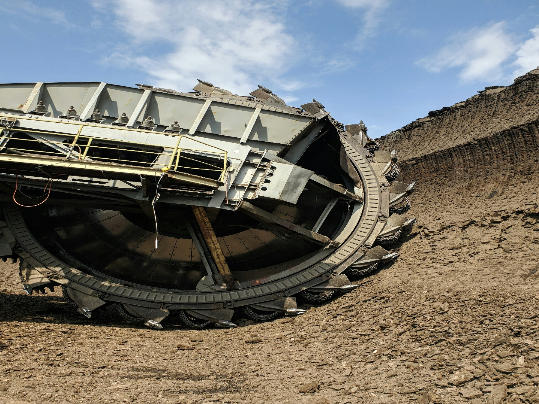
Due to the shallow and soft nature of the ionic clay deposit, Serra Verde does not use intensive mining techniques employed in hard rock deposits.
The mining is carried out using simple open-pit methods, reducing the need for heavy fragmentation equipment and decreasing operational risk. As a result, its mining and processing operations have a much lower environmental impact compared to many other mining segments.
In terms of labor, rare earth operations require multidisciplinary teams combining mining engineering, hydrometallurgy, chemistry, and environmental management.
BNamericas: Do we have in Brazil a supply chain capable of meeting the project’s demand, or do you, as the project owners, need to resort to international solutions?
Grossi: Brazil has a well-established ecosystem of services for mining, and a significant portion of Serra Verde’s operational needs is met by domestic suppliers.
However, the processing of rare earths involves specialized equipment and certain technical components that are still not widely available in Brazil, since this remains a relatively new industrial segment outside Asia. In such cases, international suppliers play an important role in the operation.
One of our goals has been to strengthen domestic capabilities over time. As the first commercial rare earth operation in Brazil, we have worked to develop local supplier networks, transfer knowledge, and build technical capacity in partnership with Brazilian institutions and contractors.
BNamericas: In general, participants in Brazil’s mining sector cite delays in environmental licensing as a major obstacle to the advancement of projects. Do the licensing processes, which in Brazil can be quite lengthy, also represent a risk for rare earth projects?
Grossi: The attractiveness of the sector depends on regulatory predictability and an efficient licensing process, especially considering the long development timelines and the capital-intensive nature of these projects.
For emerging segments such as rare earths in Brazil, ongoing coordination between industry and regulators can further strengthen the country’s competitiveness and support sustained investments.
BNamericas: How do you see Brazil positioned in the rare earths segment? Does the country actually have the capacity to become a global player in this industry?
Grossi: Brazil is well positioned to play a relevant role in the rare earth sector. The country has one of the largest rare earth resource bases in the world, including important ionic clay deposits, which offer operational and sustainability advantages.
In addition to its geological potential, Brazil benefits from an established mining industry, a predominantly renewable energy mix, and a skilled workforce. These structural characteristics support the development of a competitive rare earth industry in Brazil.
Continuous investments in technical capacity, infrastructure, and the refining process would strengthen Brazil's position globally.
Serra Verde contributes to this development as Brazil’s first large-scale producer of magnetic rare earth elements, including critical heavy REEs such as dysprosium and terbium, demonstrating that the country can operate at international standards and participate meaningfully in more diversified and resilient global supply chains.
BNamericas: Besides Brazil, which other countries in the region do you see as potential for the development of rare earths?
Grossi: The United States Geological Survey (USGS) shows, in publicly available data, how these elements are distributed across various jurisdictions globally. The feasibility of a rare earth project depends on the quality, scale, and composition of the resource, as well as on the ability to move from exploration to production.
Developing a rare earth operation requires long-term investment, technical expertise, and regulatory predictability. As our experience in Brazil shows, it can take well over a decade to bring a project to commercial production.
BNamericas: Is there any topic that I haven’t asked about that you would like to highlight?
Grossi: An important point to highlight is the growing strategic relevance of heavy rare earths, especially dysprosium and terbium. These elements are essential for high-performance permanent magnets used in electric vehicles, wind turbines, and other advanced technologies, but the global supply remains highly concentrated.
Serra Verde’s production profile includes a significant proportion of these critical heavy rare earths, positioning Brazil to contribute in a relevant way to more diversified and resilient global supply chains.
At the same time, we believe that the sector’s future competitiveness will depend increasingly on responsible production standards. Our operating model integrates environmental management, safety discipline, and community engagement as central components of long-term value creation, making Serra Verde a leader in responsible rare earth production. "Source:Bnamericas.com"

 English