Neodymium Magnets in speakers:
A component that perhaps doesn't get the exposure that it should – the magnet. While each speaker driver is made up of two magnets-an electromagnet and a natural/permanent magnet.
Basic Principle:
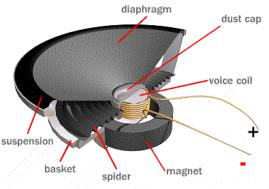
In order to translate an electrical signal into an audible sound, speakers contain an electromagnet: a metal coil which creates a magnetic field when an electric current flows through it. This coil behaves much like a normal (permanent) magnet, with one particularly handy property: reversing the direction of the current in the coil flips the poles of the magnet.Inside a speaker, an electromagnet is placed in front of a permanent magnet. The permanent magnet is fixed firmly into position whereas the electromagnet is mobile. As pulses of electricity pass through the coil of the electromagnet, the direction of its magnetic field is rapidly changed. This means that it is in turn attracted to and repelled from the permanent magnet, vibrating back and forth.The electromagnet is attached to a cone made of a flexible material such as paper or plastic which amplifies these vibrations, pumping sound waves into the surrounding air. The stronger the magnets, the more reactive and powerful the speaker driver, which results in a better speaker!
Why are neodymium magnets so special?
It all has to do with size and strength.Neodymium magnets are the strongest type of natural magnet in the world, and can pack an extraordinary amount of magnetic energy into a very small package.This means that even in small amounts, these magnets are still extremely strong.It is for this reason that a number of Fluance speakers use neodymium magnets in their tweeters. The strength of these magnets allows for an extremely powerful driver, without making any sacrifices in overall weight or depth.As a result, Fluance neodymium tweeters are light, powerful, and have a smaller profile than other drivers that use lower quality magnets. In addition, the strength of the neodymium magnets allow the tweeters to perform better in more demanding situations, resulting in less distortion at any operating level.
Pros and cons of using neodymium:
Improve the sensitivity of loudspeakers but also greatly reduce the number of magnets used. NdFeB has the advantages of high-cost performance and good mechanical properties, while its disadvantages are low Curie temperature, poor temperature characteristics and easy to be powdered and corroded. It offers lower corrosion resistance. It is brittle and hence gets break/crack due to collisions.



 English