In what's described as a key advancement for the development of systems to help propel humans into deep space, scientists have demonstrated a method of extracting oxygen from water in microgravity using magnets. The technology shapes as a cost-effective and viable way to keep astronauts breathing during their journeys, and marks an important breakthrough for the production of oxygen from water in the absence of buoyant forces.
“On the International Space Station, oxygen is generated using an electrolytic cell that splits water into hydrogen and oxygen, but then you have to get those gasses out of the system," explained lead author Álvaro Romero-Calvo. "A relatively recent analysis from a researcher at NASA Ames concluded that adapting the same architecture on a trip to Mars would have such significant mass and reliability penalties that it wouldn’t make any sense to use.”
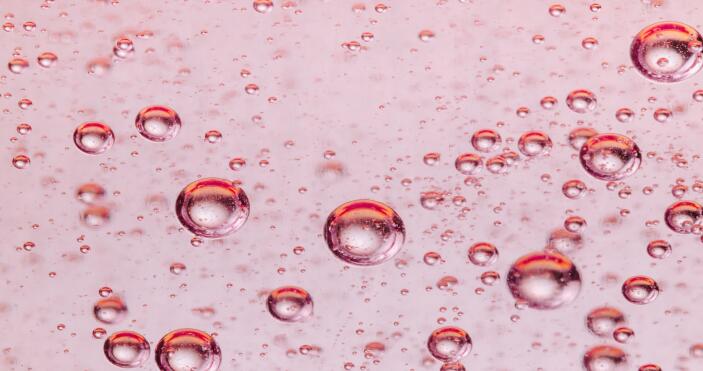
The difficulty in extracting oxygen in space is tied to the lack of gravity. On Earth, gravity plays a role in helping bubbles of CO2 float to the surface in a glass of soda, for example. But in space, these bubbles remain suspended in the fluid. These gases can be extracted with the help of cumbersome and expensive centrifuge machinery, but scientists have spent years exploring how magnets can be used to the same effect.
To study this possibility in a space-like environment, the study authors turned to the Bremen Drop Tower in Germany, a 146-meter-tall (480-ft) scientific facility that sends a shockproof capsule plummeting to the floor to create a brief window of microgravity experiment time, in this case lasting 9.2 seconds.
The scientists developed a new technique to detach gas bubbles from an electrode surface in various liquids using neodymium magnets. In their successful experiments, the researchers were able to use this approach to attract and repel gas bubbles in microgravity using magnetism for the first time.
“After years of analytical and computational research, being able to use this amazing drop tower in Germany provided concrete proof that this concept will function in the zero-g space environment," said Professor Hanspeter Schaub of University of Colorado Boulder.
According to the team, the advance could lead to a new generation of life support systems for next-generation spacecraft, and is the kind of technology that could greatly aid efforts to send humans to the Moon and Mars.
“These effects have tremendous consequences for the further development of phase separation systems, such as for long-term space missions, suggesting that efficient oxygen and, for example, hydrogen production in water (photo-)electrolyzer systems can be achieved even in the near-absence of the buoyant-force," said study author Dr Katharina Brinkert of the University of Warwick.
Source:https://newatlas.com/science/chemistry-oxygen-water-magnetism-microgravity/



 English